Post Dose builds every patient a weekly meal plan around their shot day, appetite, and protein target. Your front desk hands out a code. The app handles the eating part between visits.
● Live on the App Store today · iPhone
What this industry pays to bring in one new GLP-1 patient, based on published affiliate rates.
Where patients most often stall and quit. It is almost always eating, not dosing.
What it costs to help that same patient stay on track with food, under your brand.
Between visits, patients are on their own with the hard questions. What should I eat on shot day? Why am I not hungry on Wednesday? Am I getting enough protein? Post Dose lives in that gap.
Post Dose is a meal companion for patients on Ozempic, Wegovy, Mounjaro, Zepbound, and other GLP-1 medications. Not a diet app with a GLP-1 sticker on it. Every screen assumes the shot.
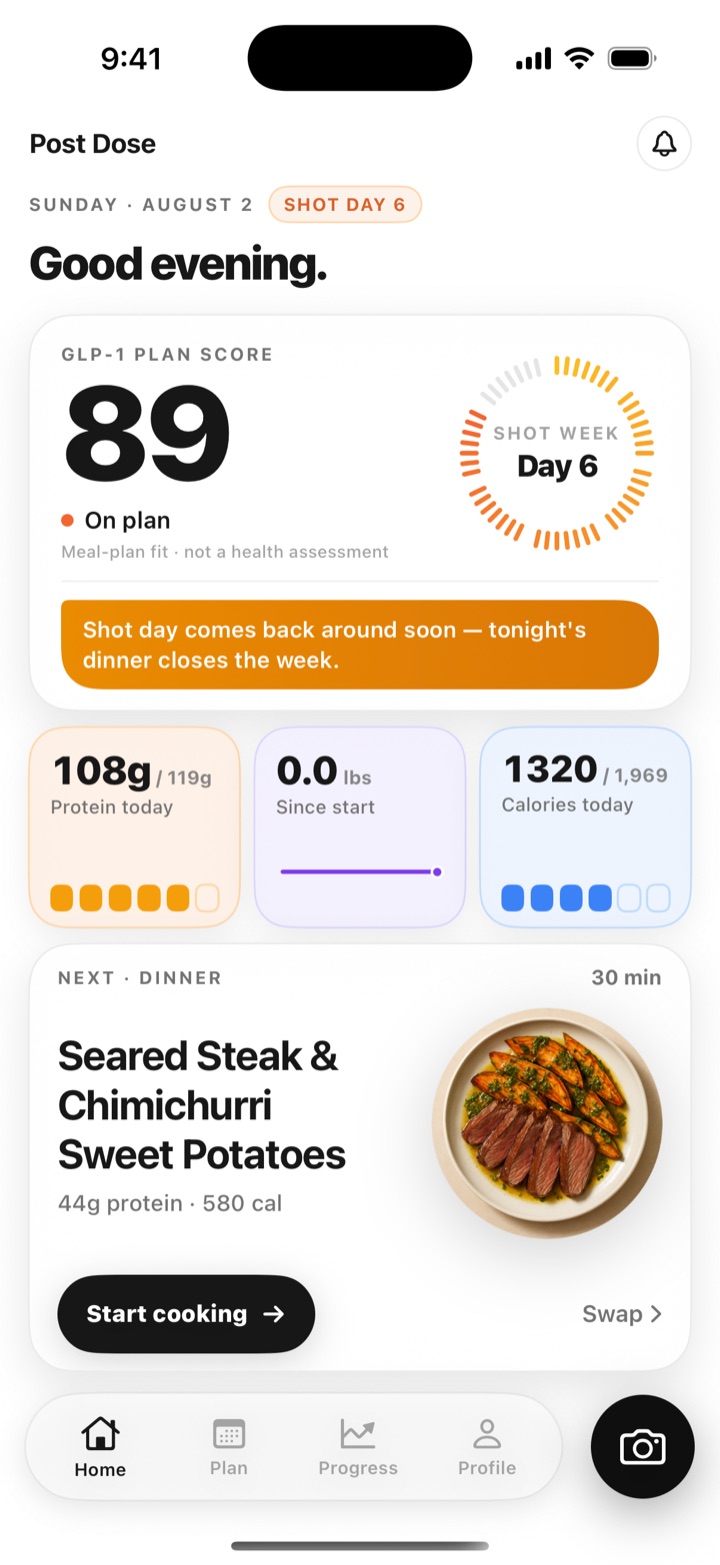
One screen a day: plan score, shot week dial, protein, and tonight's dinner.
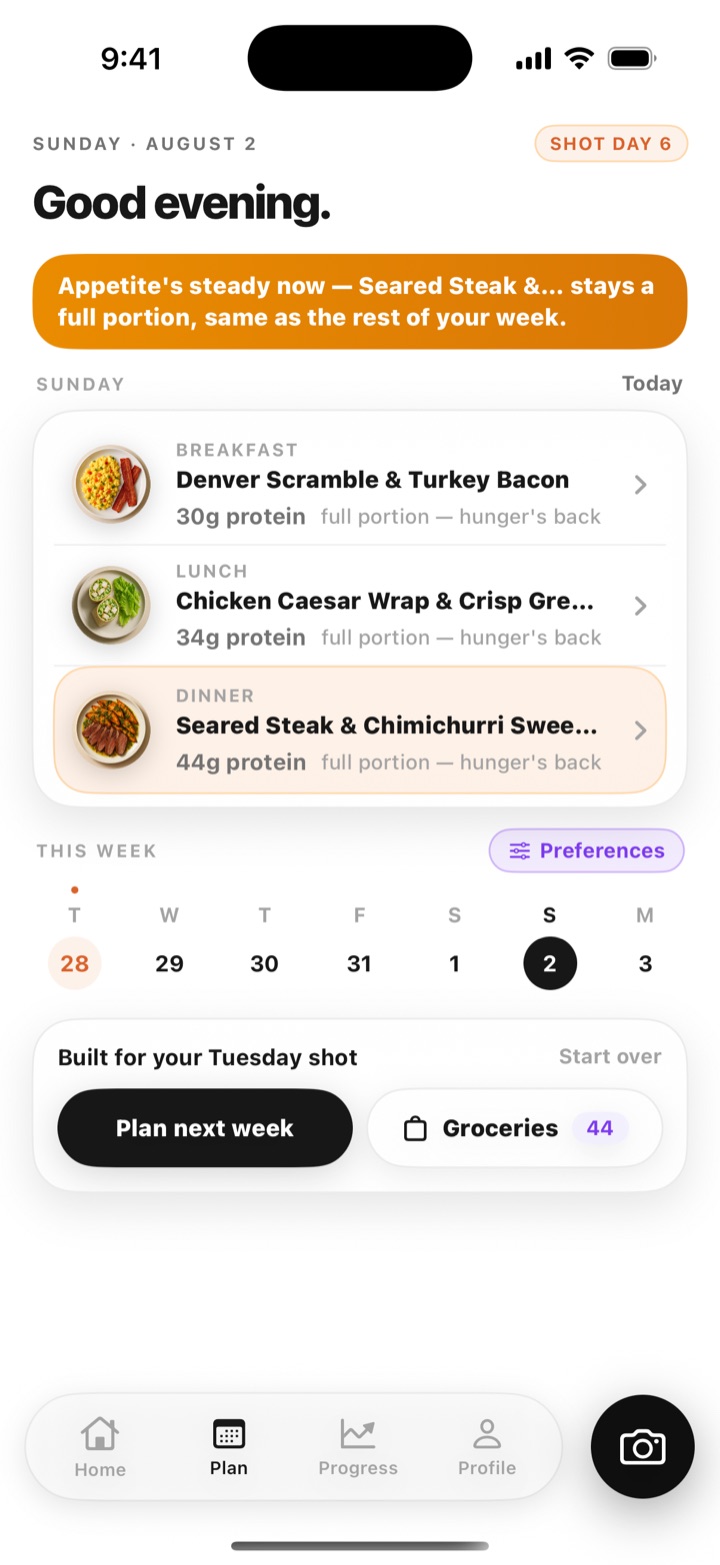
A full week of meals, built around the shot day. One tap plans it all.
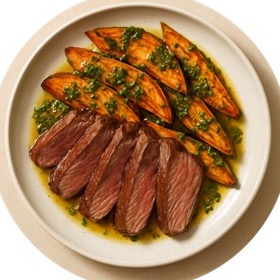
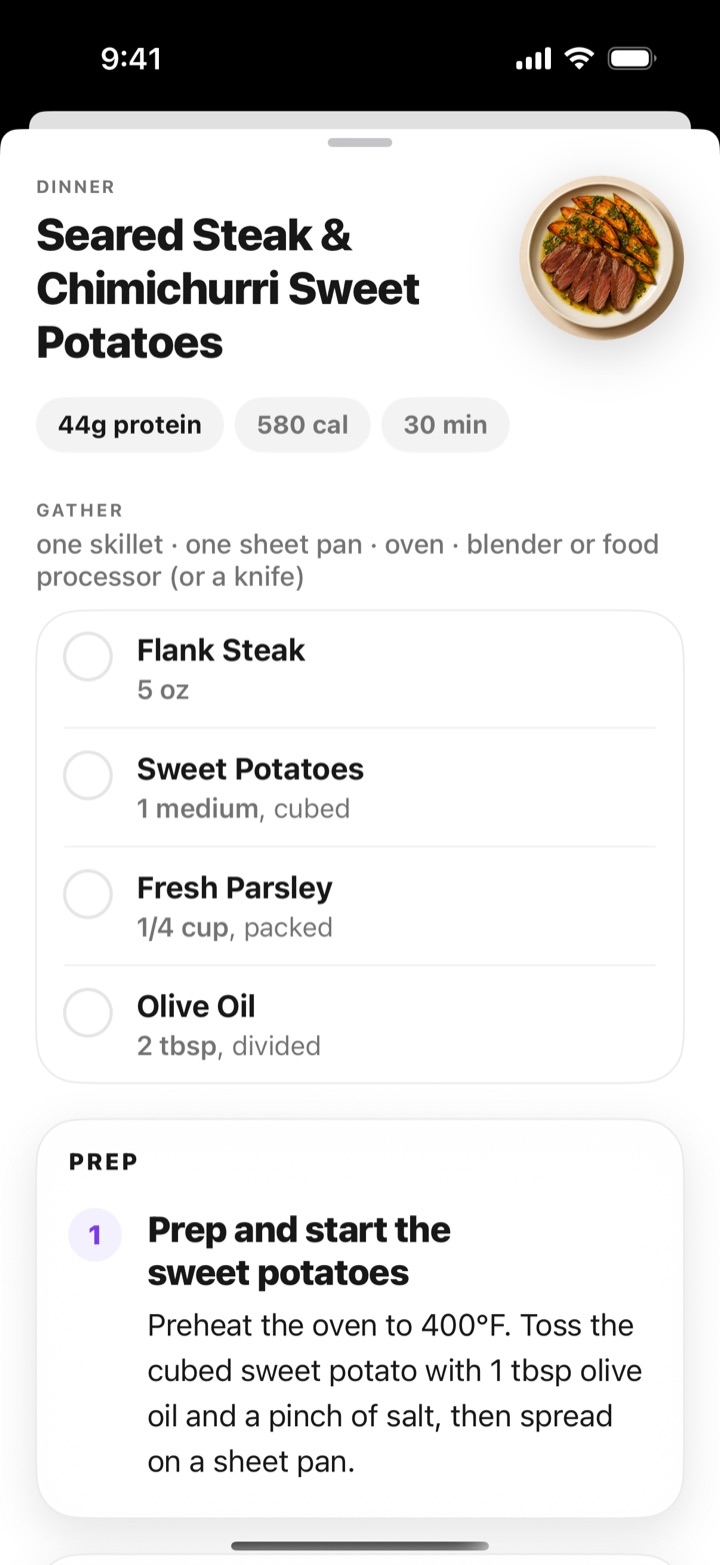
Recipes that walk the patient through prep, cook, and plate, step by step.
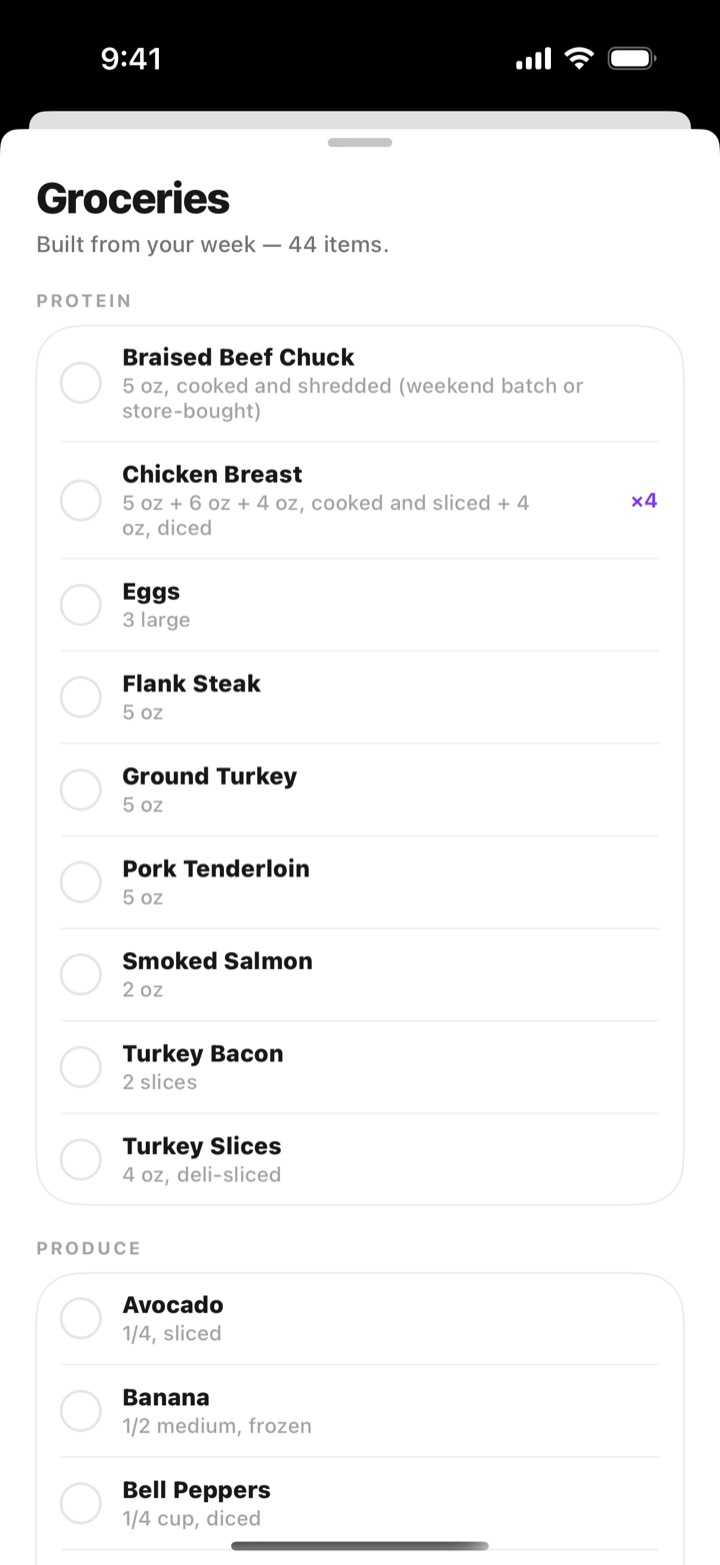
The shopping list writes itself from the week's plan, sorted by aisle.
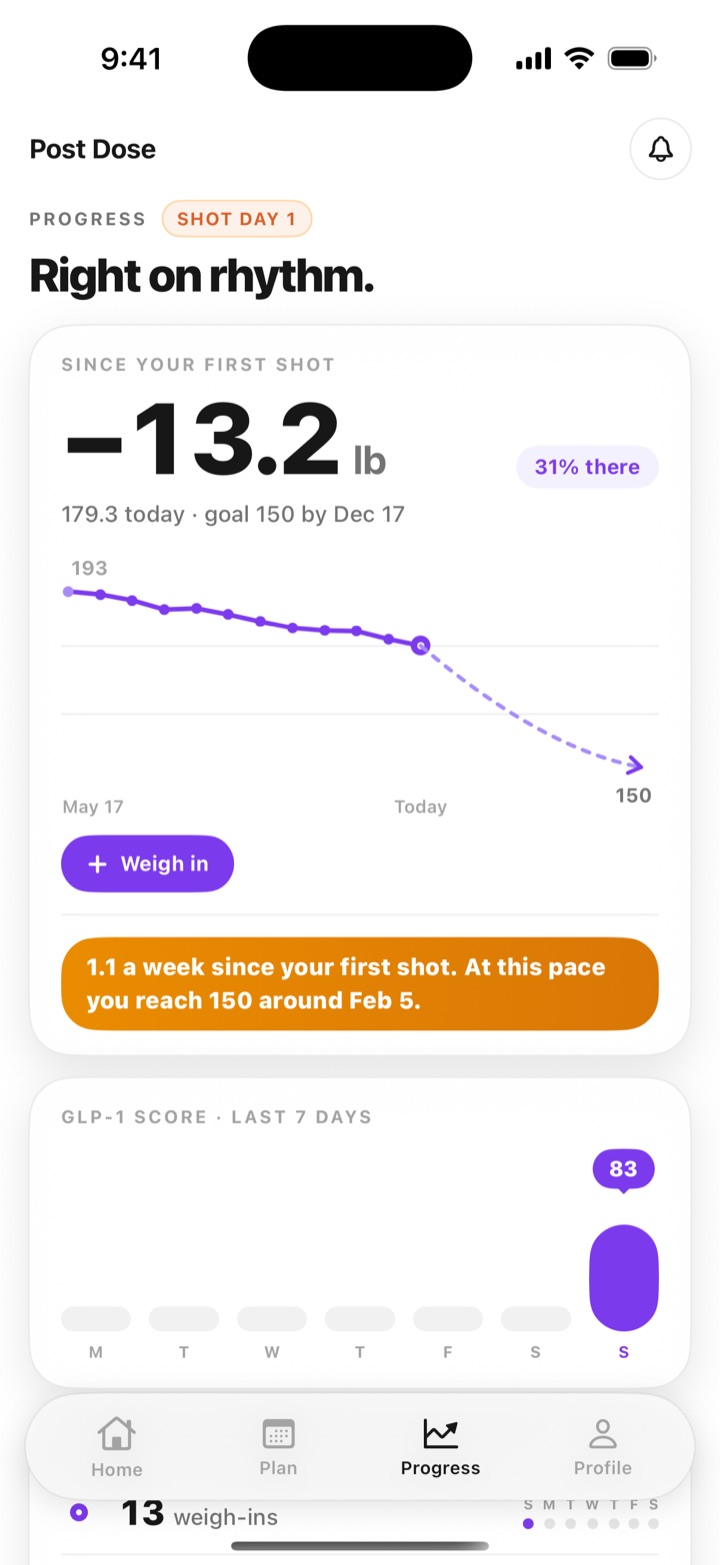
Weight trend with a projection to goal. A weigh-in takes five seconds.
Every meal in Post Dose is hand-built with exact protein and calories. The engine's job is to pick the right ones for this patient, this week. Here is the whole pipeline.
Breakfasts, lunches, and dinners each sit in a tight calorie and protein band. That means any swap keeps the day on track. No meal can wreck the plan.
Allergies are a hard wall, never served. Dislikes get avoided. Favorites lead the rotation. Busy weeknights get 20-minute dinners.
The engine knows where the patient is in the cycle. Low-appetite days after the shot get smaller, gentler meals on purpose. Full portions come back when hunger does.
If a day lands under the patient's protein target, the engine upgrades meals until the floor is met. It only ever upgrades. It never waters a day down.
One tap plans the whole week. Every swap teaches the engine what the patient actually likes. The grocery list builds itself from whatever the week says.
Ate out? The patient photographs the plate and the app estimates protein and calories with AI, ready to correct and log.
"Chipotle bowl, chicken, no rice." The app works out the numbers. The patient can fix the estimate before it logs.
A weekly GLP-1 cycle has a rhythm: the shot, the low-appetite dip, the climb back, then steady days. Post Dose plans meals, portions, and check-ins around that rhythm. Here is a week for a patient who injects on Monday.
From the code on your front desk card to a fully built week: about three minutes of taps. No manual food math, ever.
The patient scans your QR card or taps your link. The App Store applies the code. No card required at signup.
Basics, then the shot. Everything else is tap-to-answer.
Protein and calorie targets are computed, the week is written around the shot day, and reminders are scheduled.
The patient lands on a planned week: meals picked, groceries listed, coach lines set to their cycle. Day one starts tonight.
Two ways in. Both end the same way: if the app is not helping your patients stay on track, you stop, and you owe nothing more.
We walk your staff through the app, drop off the QR poster for the front desk, and hand over your codes plus a ready-to-send patient email. Staff accounts unlock the same day.
That is the whole job. A patient gets their shot, gets a card with a QR code, and is set up before they reach the parking lot.
Codes handed out versus redeemed, weekly active patients, and meals planned. No dashboard to learn, no login to remember. It arrives by email.
We sit down with the numbers and your team's notes. If it earned its place, it continues. If not, you walk away and owe nothing more.
Nothing. They redeem your code and get the full app, which normally costs patients $39.99 a year. The clinic covers them, so a real paid product arrives as part of your program, under your recommendation.
Yes, fully remote. The code redeems from a link, so it drops straight into the patient email template we give you, or a text after the virtual visit. No office visit, no QR card needed. Out-of-state patients work the same way.
Today you see your clinic in aggregate: codes redeemed, weekly active patients, meals planned. You never see an individual patient's food log or weight unless they show you their phone at a visit, which many happily do. Because nothing individual reaches you, there is nothing for the patient to consent to. If pilot clinics want patient-level visibility, we will build it strictly patient-opt-in: the patient turns sharing on, and can turn it off.
No portal, on purpose. Everything arrives in a Monday morning email your whole team can read in thirty seconds. A live clinic dashboard is on the roadmap, and pilot clinics decide what goes in it.
No. Your clinic never sends us patient records, and we never hold data on your behalf, so handing out codes creates no HIPAA relationship and needs no BAA. Patients download a consumer app themselves, and their data lives in their own account under our privacy policy, the same as any app they would find on their own.
We never see your patient records, and nothing from your clinic's systems touches ours. Patients download a consumer app themselves and their data lives in their own account. You just hand out codes.
Hand a card with a QR code to the patient at their shot visit. That is the entire workflow. No portal, no accounts to create, no forms.
iPhone today. If a patient is on Android, their code simply goes unused and you are never billed for it.
You choose, and the math stays small on purpose. Keeping all 50 patients on the app costs $100 a month at $2 per redeemed patient, against the $175 to $600 most clinics spend to acquire one patient. Prefer not to carry the cost? We can set your clinic up with a discount code instead: your patients pay a reduced price themselves and your cost is zero. Or stop entirely; there is no contract and nothing else owed. Patients who love the app can always keep it on their own subscription.
Post Dose is built by Carter Myers in Lancaster, Ohio. Pilot clinics talk directly to the person who builds the product. Feedback does not go into a queue. It goes into next week's build.